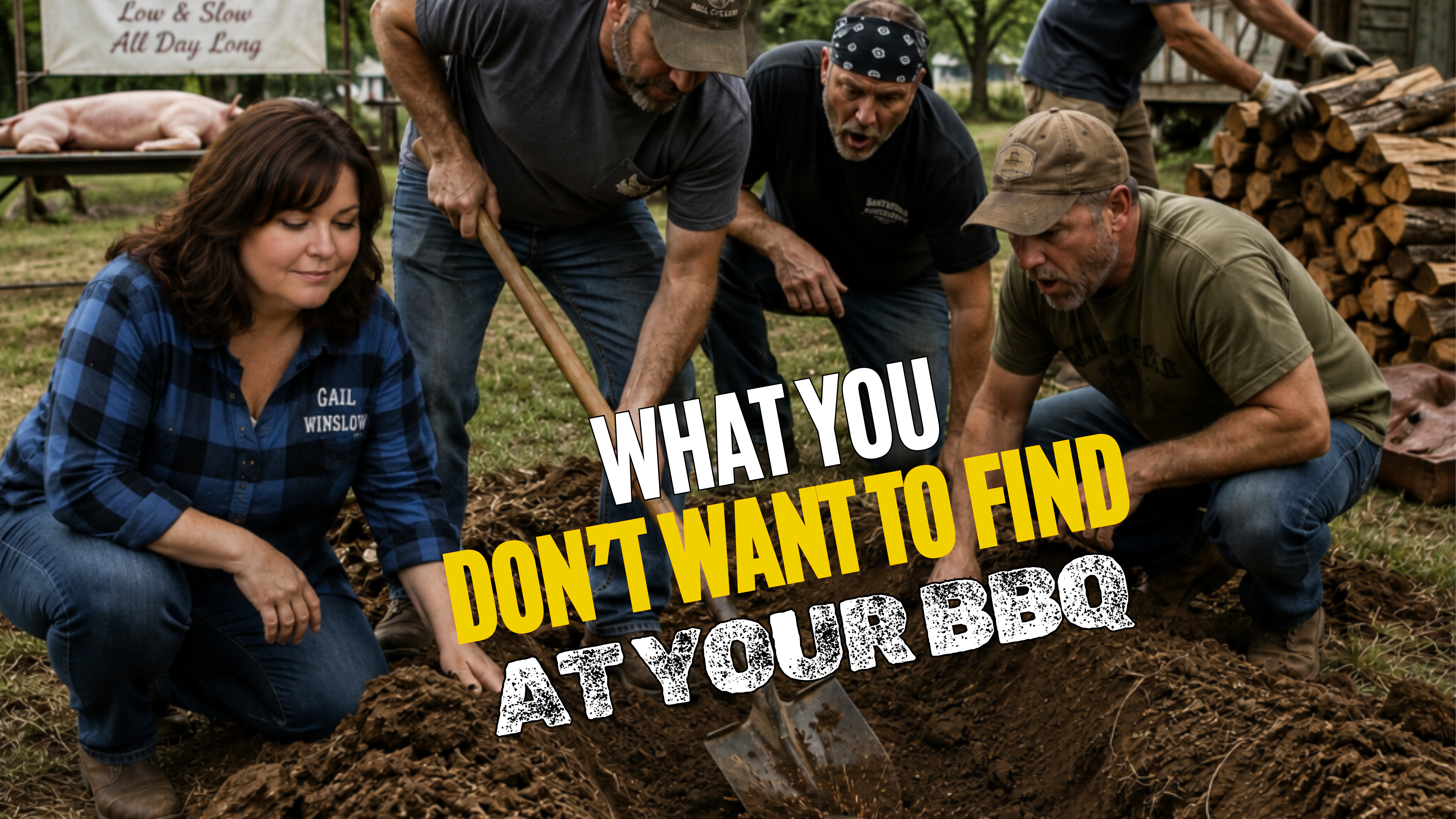
Nobody expected the shovel to stop with a sharp metallic clang, especially not less than half an hour into digging the pit. Everything had been falling perfectly into place for what promised to be a memorable barbecue. The whole hog had already been rubbed down with salt, pepper, garlic, and paprika, while split oak rested under a tarp, waiting for sunrise. Coolers lined the edge of the yard, and before long, friends, neighbors, and family would be arriving with lawn chairs, side dishes, and stories. It was shaping up to be the kind of gathering people talk about for years—until somebody hit something underground.
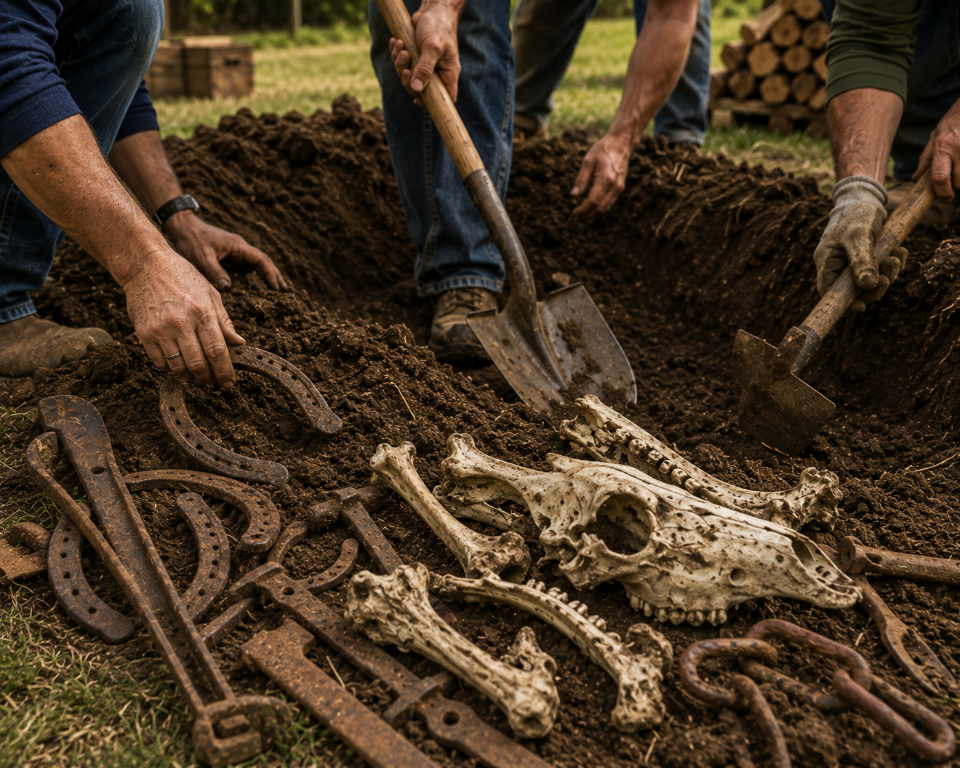
“Hold up,” someone said, and the yard fell quiet. The sound hadn’t been the dull thud of rock; it was hollow, almost metallic. Curious, we gathered around the edge of the hole, brushing dirt aside with our boots before one of us climbed in and began digging by hand. What emerged first was an old rusted horseshoe, followed by another, then a bent piece of heavy iron, and finally what looked like weathered animal bones. For a few seconds, nobody spoke. One guy let out a nervous laugh, while another suggested we might have picked the wrong spot for the pit. Soon enough, theories began flying.
Every Backyard Has a Story
As speculation grew, one neighbor became convinced we’d uncovered the remains of an old blacksmith shop, while another insisted there had once been a small barn on the property decades ago. Someone joked about buried treasure, but by then, the barbecue itself had faded into the background. Everyone had suddenly become an amateur historian. That’s the funny thing about barbecue—it slows people down just enough to notice things they’d normally overlook. When you’re cooking low and slow, conversations wander, stories surface, and memories come alive. The fire has a way of pulling history out of people almost as easily as it draws smoke through a piece of brisket.
Then the Old Farmer Arrived
About an hour later, an older gentleman from down the road wandered over after hearing about our discovery. He peered into the pit, said little at first, then picked up one of the horseshoes and turned it over in his hands before smiling. “I think I know exactly what you’ve got,” he said. He went on to explain that nearly a century ago, the property had belonged to a family that raised hogs and draft horses. Back then—long before propane grills, pellet smokers, or stainless steel outdoor kitchens—families gathered around pits dug directly into the earth. Whole hogs cooked through the night while neighbors split wood and children carried buckets of water.
The old iron, he explained, was likely from wagon hardware, and the horseshoes belonged to workhorses long gone. The bones were probably remnants from livestock butchered generations ago. There was nothing mysterious about it—just history. Suddenly, what had seemed strange and unsettling transformed into something meaningful and even beautiful.
The Ground Beneath Our Feet
Moments like that remind us that barbecue didn’t begin inside modern smokers or competition trailers. It started in fields, on farms, in churchyards, beside rivers, and behind family homes. People cooked over fire because it was what they had, and the land provided everything they needed—the wood, the animals, and the gathering place. Every pit carried the imprint of the families who dug it. When we barbecue today, we’re continuing something far older than recipes; we’re participating in a tradition shaped by hardworking people who understood patience, community, and respect for the land. That’s something worth remembering.
Fire Doesn’t Care What Year It Is
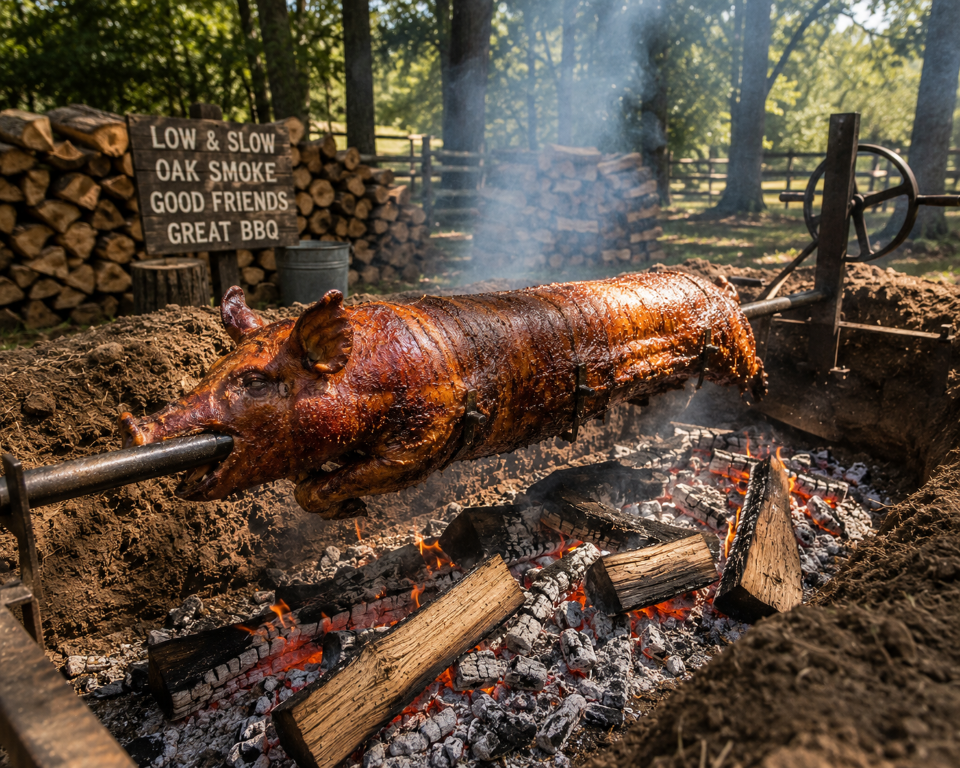
After carefully documenting everything we found, we moved the pit just a few feet away, leaving the artifacts exactly where they had rested for decades. Soon, the fire was lit, and the oak settled into glowing embers as the hog slowly rotated above the heat. Children laughed, coolers opened, someone began slicing tomatoes, and another neighbor arrived with homemade slaw. The smell of smoke drifted across the yard just as it likely had generations earlier. Though the people were different, the fire—and its purpose—remained the same.
Good barbecue has always been about more than feeding stomachs. It feeds conversation, friendships, families, and communities, bringing people together in ways few other traditions can.
Respect the Land
Every pitmaster spends countless hours learning about temperatures, smoke management, wood selection, and seasoning, and while those skills matter, there’s another lesson that often goes overlooked: respect the ground beneath your pit. Whether you’re cooking on a competition trailer, a backyard smoker, a Santa Maria grill, or an old-fashioned earth pit, you’re standing on land that belonged to someone before you. Someone farmed it, hunted it, gathered around a fire there, and likely shared a meal in that very spot.
Barbecue has always been more than cooking—it’s stewardship, gratitude, and the preservation of tradition while creating new memories. The fire reminds us of that every time we light it.
The Best Thing We Found That Day
People still ask what we uncovered beneath that barbecue pit. Yes, there were old horseshoes, rusted iron, and weathered livestock bones, and while those were interesting, they weren’t the most important discovery. What we truly found was perspective. We realized that barbecue isn’t something we invented—it’s something we inherited. Every spark we light carries forward countless meals cooked before ours, and every backyard cookout becomes another chapter in an ongoing story.
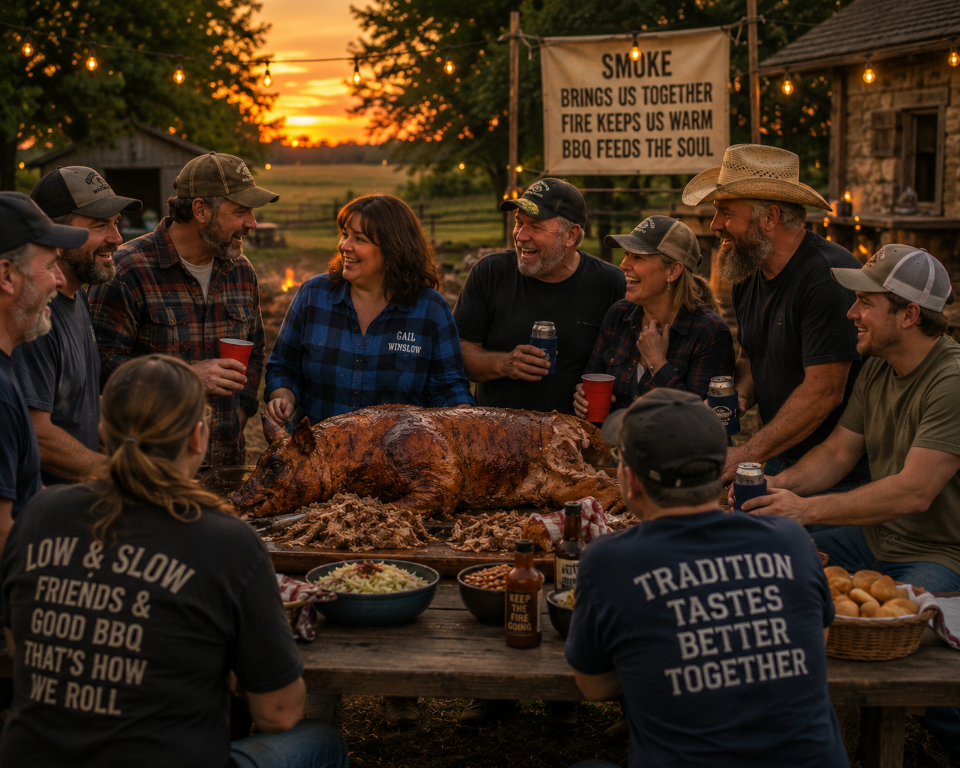
As darkness settled over the yard, we finally pulled the whole hog from the pit. Plates were filled, kids chased fireflies, and conversations grew louder than the crackling oak. Before everyone headed home, we returned to the original hole one last time. No one wanted to disturb it anymore, so we gently covered the old iron and bones with fresh soil—not to hide history, but to honor it.
After all, every barbecue pit tells two stories. One belongs to the fire you’re tending today, and the other belongs to the people who stood over that same ground long before you ever struck the first match. Somehow, those two stories always seem to meet over smoke.